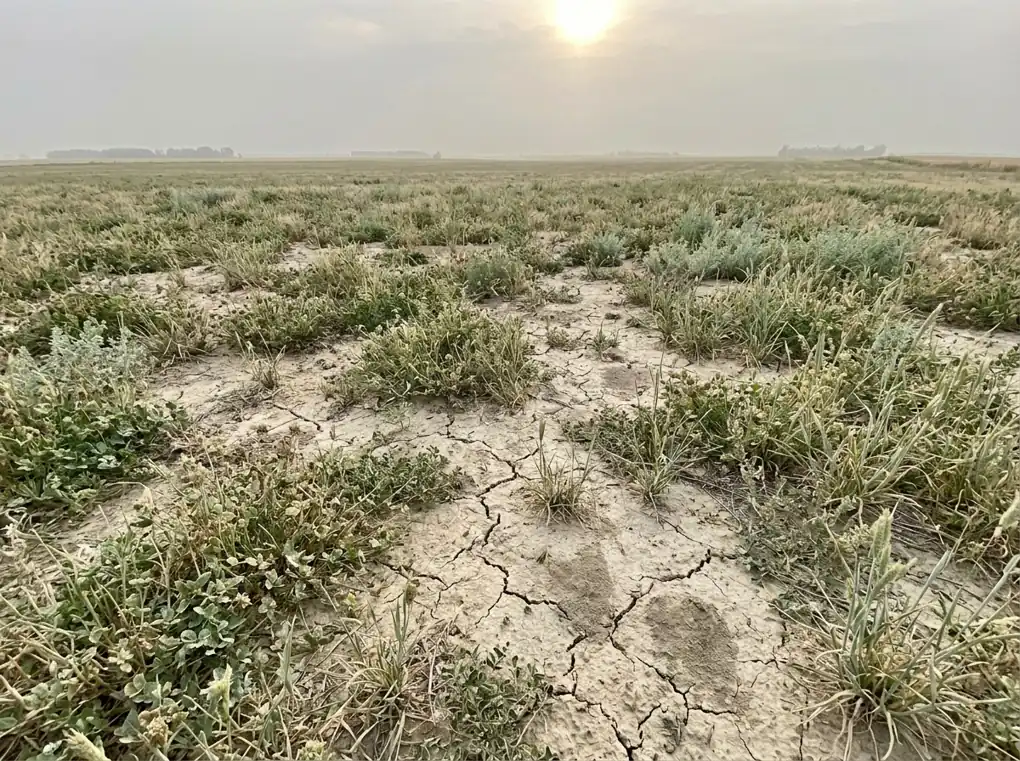
What we expected
The plan for the Danube Lowlands assumed a normal spring: rye and vetch drilled into stubble in October, 70 to 80 percent cover by the first March pass, terminated in April ahead of sunflower. The forecast priced the season on that curve.
Rainfall from January to April came in at 48 millimetres against a ten-year average of 131. By the second pass most of the co-op was asking whether the season still counted.
What the passes showed
Cover across the 180 farms averaged 61 percent in March, not the 75 the plan assumed. On the heavy chernozem in the south the rye held; on the sandier northern edge the stand thinned to under 40 percent on two fields.

A dry year is not a failed year. It is the year that tells you whether your baseline was honest.
The two fields that failed
Fields 31 and 32 are excluded from this season's issuance. They stay enrolled, move to a drought-tolerant mix, and get resampled in autumn.
- Average cover in March: 61% (plan: 75%)
- Fields excluded from issuance: 2 of 180
- Forecast revised down by 11%, published in the dashboard on 14 March
What changes next season
Mixes by soil type instead of by farm, an earlier drilling window, and a dry-year clause in the grower agreement so the forecast carries the risk rather than the farmer.